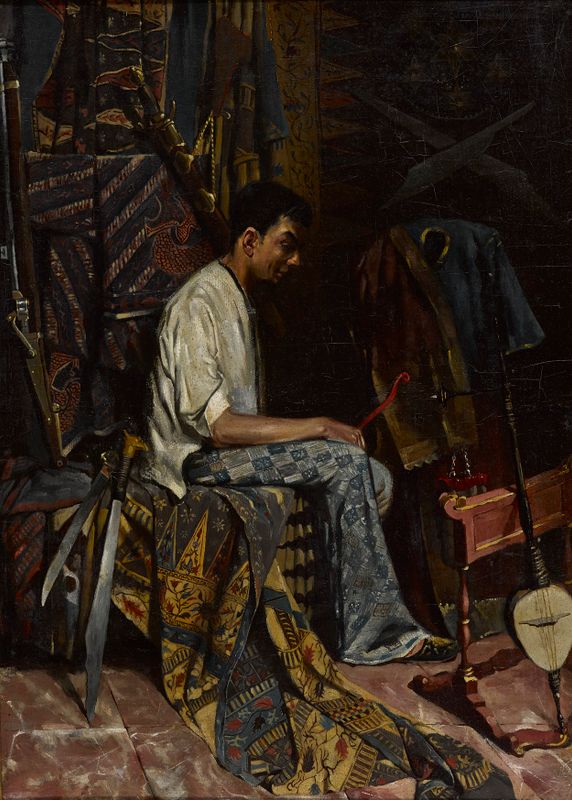
The worlds of Jan Toorop
From 21 January through 10 May 2026, Singer Laren will present The worlds of Jan Toorop. With more than eighty important works – paintings, works on paper, sculptures and letters – and unexpected combinations between Toorop’s work and that of his contemporaries and followers, this exhibition offers a fresh perspective on one of the most significant and versatile artists working in the Netherlands around the turn of the 20th century: Jan Toorop (1858-1928). The worlds of Jan Toorop demonstrates for the first time how Toorop consistently and explicitly referenced his Javanese and Chinese heritage throughout his entire career.
A global citizen, moving between cultures
Toorop brought together multiple cultures, social and geographical worlds within himself. Born on the island of Java in what is now Indonesia but was then part of the colony known as the Dutch East Indies, he became a transborder citizen of the world who collected a circle of kindred spirits around himself in every new environment. His youth on Java and Bangka was a vital source of fodder for his imagination and opened his mind to a variety of cultural influences at an early age. His encounters with Chinese migrant workers on Bangka also left an indelible impression on his intellectual and aesthetic sensibility. As the artist himself aptly put it:
‘Indonesia has meant a great deal to me. It is impossible to imagine me without Indonesia. My work is fundamentally Eastern.’
Avant-garde member and innovator
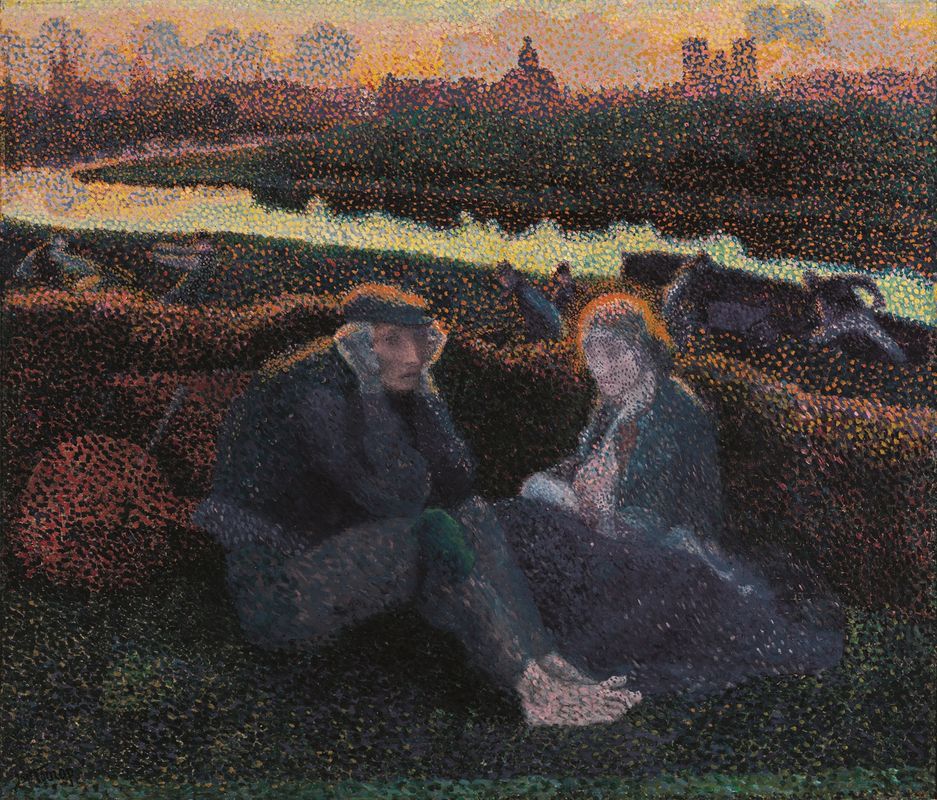
Around 1900, Toorop was known as the most avant-garde artist in the Netherlands. He absorbed the new movements emerging in European art, such as pointillism and art nouveau, and created his own distinct versions of them. His work garnered admiration not only in Laren, but in Paris, Vienna and Copenhagen as well. Toorop brought innovation to the traditionally conservative Dutch art world, not only through his own internationally-oriented work, but also by organising exhibitions with some of the most progressive artists in Europe. No wonder, then, that he is often mentioned in the same breath as Piet Mondrian and Vincent van Gogh.
An artist of colour
Toorop was a major artist, a colonial migrant and a man of colour. His Indo-European background and appearance would have been unmistakeable to his contemporaries. While his success continued to grow, art critics often responded to his identity with a mix of fascination and racism. Over the years, Toorop’s heritage has faded into obscurity: he has come to be considered a ‘white’ Dutch artist, despite the important key his roots – Javanese, and Chinese on his mother’s side – provide in attempts to understand his work.
A fresh perspective
The worlds of Jan Toorop restores Toorop's true identity. The exhibition displays his work alongside that of artists he admired – such as James McNeill Whistler and Paul Gauguin – and next to art made by young people who were, in turn, inspired by Toorop. The resulting visual evidence shows that, rather than an elusive chameleon, Toorop was an artist who developed a unique visual language that brought together modern European art and Javanese visual and material culture.
The St. Bernold’s Stations of the Cross
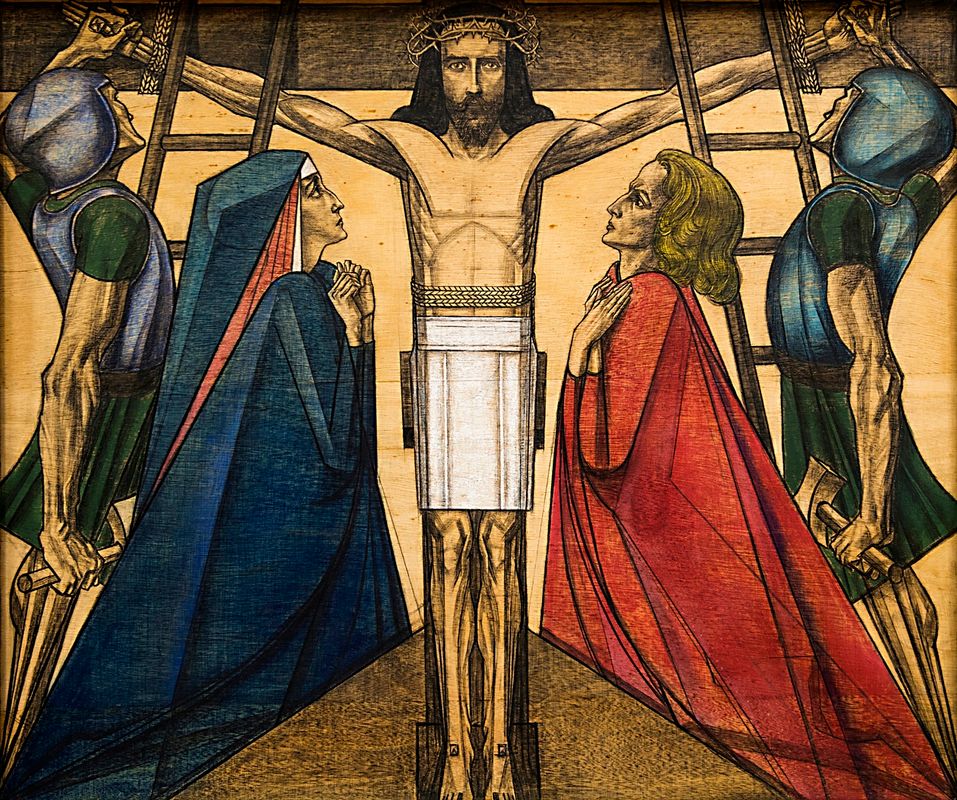
The worlds of Jan Toorop has the unique distinction of presenting all fourteen of his Stations of the Cross, on loan from St. Bernold’s in Oosterbeek. Toorop made these chalk-on-panel drawings between 1916 and 1919. Clearly displaying his refined approach to detail and expressive use of line, they are among the finest of his Catholic works. The Stations of the Cross are paintings or reliefs that depict specific scenes leading up to Christ’s crucifixion. Together, the fourteen Stations are a series of devotions intended to help believers contemplate the last moments of Jesus. Toorop’s Stations have survived to the present day because they were stored in a safe during the Battle of Arnhem in 1944. This is the first time the complete series will be displayed outside the church.